

DevOps Portal for Admins
Welcome to the DevOps portal. This guide will guide you through the features that this portal role grants you so that you have a hassle-free experience.
Below, you will find a series of possible functions that your role as a admin grants within the portal:
- Managing Projects
- Assign a user to a project
- Modifying user accounts
- Modifying Technical User accounts
- Modify Organizations
- Administration menu of the DevOps Portal
Managing Projects
To see or update the settings of a project, click the Project Key (NEWPROJECT2 in the example). Click More ... to open the actions menu.
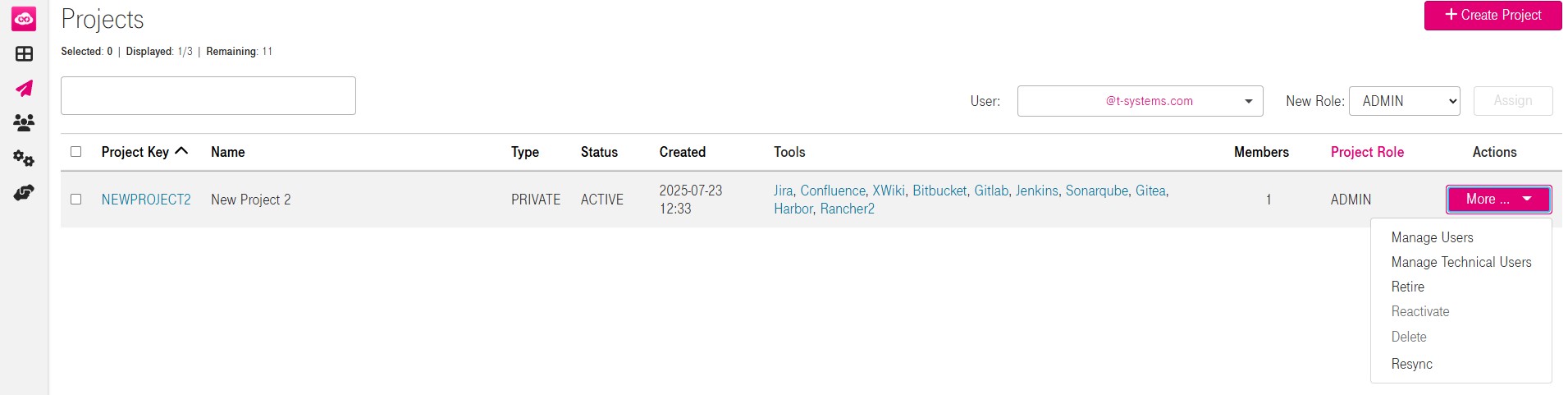
To modify a project you click the Project Key and check the box Edit Details at the bottom of the page. This will enable you to change the Name, the text in the Description field, the Type and the Jira Notification Scheme of your project. As well you are able to add tools to the project.
The action menu behind the More... button gives you additional control over the projects YOU created.
It enables you to do the following:
- Manage Users: Assign Users to the Project
- Manage Technical Users: Assign Technical Users for API access to the project
- Resync.: Since the DevOps Portal manages Projects accross all tools in the DevOps toolchain it now automatically links projects with the same Project Key in all tools which each other. To activate it for an existing project, simply Resync the Project. ???
Assign a user to a project
If you would like to add a user to a project Click Users icon in the menu on the left side:

Then select the user from the list. To narrow down the results you can search for users:

Select the Project and the New Role - one of ADMIN, MASTER, DEVELOPER, VIEWER (depending on the desired rights). After that, click Assign:

Each user who is a member of a project has to be in exactly one Project Role. Therefore it is not possible to have multiple roles in a project. If you want to Delete a User from a project, simply select the "-" from the New Role dropdown menu.
Different roles have different sets of permissions. Possible roles are:
Admin | Full access, even to potentially dangerous operations like Project Lifecycle Transitions. Can administer Project Members and Roles. |
|---|---|
Master | Limited full access to avoid accidental data loss or other irreversible changes. |
Developer | Read-write access to contribute to the Project |
Viewer | Read-only access to all not security-relevant data in the Project |
Please refer to Users and roles for a detailed description of users and roles in the tools.
Modifying user accounts
A user account can be modified by clicking his / her last name. However, it's not possible to change a user's e-mail address.
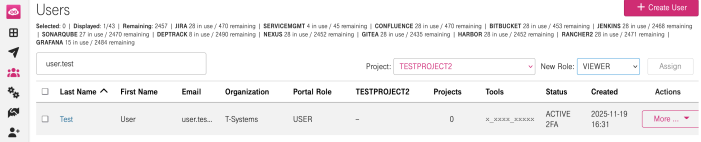
To change the user's email address, the user must be deleted first. It can then be recreated with the new email address.
Under the Users menu, the Lock/Unlock function is available in the More... dropdown menu. This function is used to suspend a user account (which is a necessary step before deleting a profile). The status can be changed to locked or unlocked here.
Please keep in mind that a locked user can still receive notification emails.
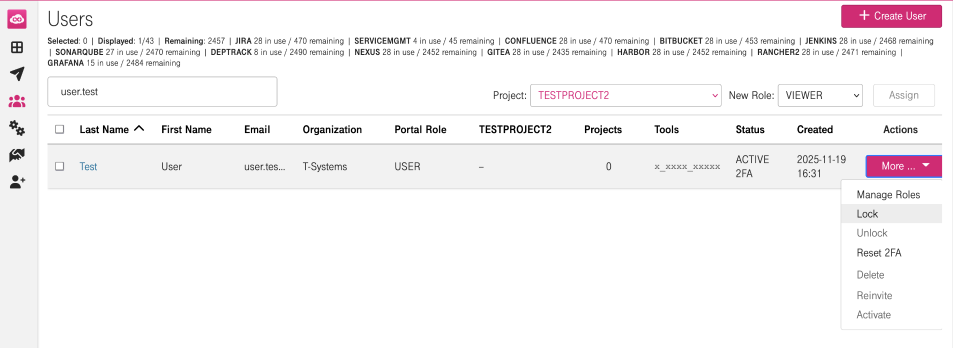
In order to delete a user, he / she must be locked first and must remain in locked status for a certain period of time. Since deletion is not reversible, It is suggested to only lock users rather than deleting the user profile.
The Delete option will present a confirmation.
An attempt to delete a locked user without being in locked state long enough will result in an error message: "This user has not yet spent enough time in Locked status to be deleted."
In case of a re-invited user, it is also possible to let the admin do the activation process instead of the user. To do so, click Activate. The user can still change the password later with the reset password option. Please refer to the Forgotten Password section of the DevOps Portal for Users page for details regarding forgotten passwords.
Modifying Technical User accounts

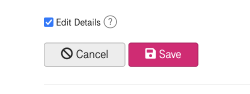
To view the details of a technical user, click its username. Tick the Edit Details box to make modifications to that user.
It's also possible to change the tech user's password here. There is a minimum length required for passwords.
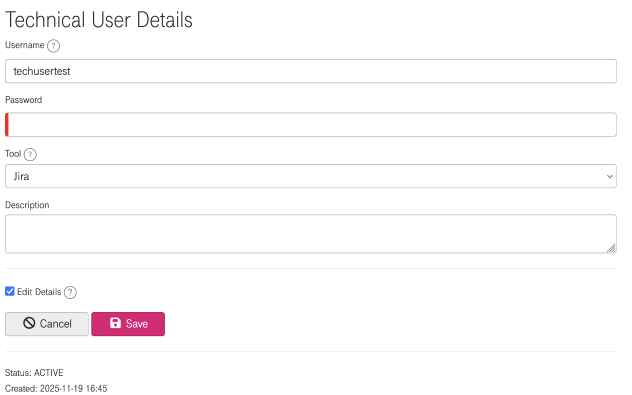
If you would like to change the username or the selected tool you have to Delete the user and recreate it again. The Delete option will present a confirmation.
Modify Organizations
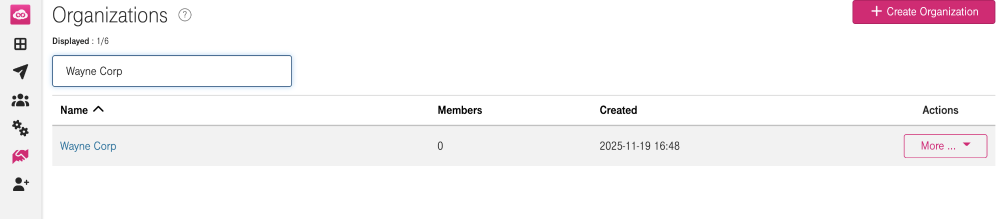
To modify an organization's profile, click the organization name (Wayne Corp in the example).
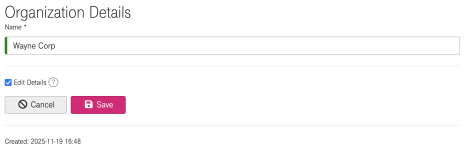
The Edit an Organization page will load and you can change the organization's name by replacing the name with the new one (so it is not necessary to delete an organization just because of the wrong name or a typo). As with the users edit page, the Edit Details checkbox needs to be ticked for editing to be enabled.
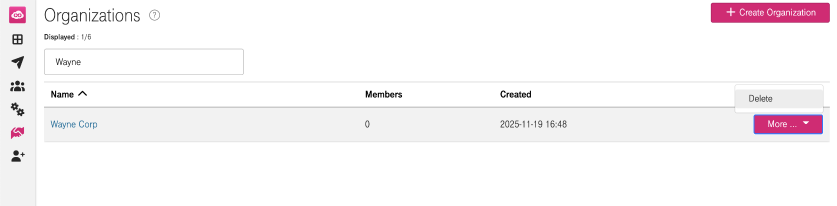
There is an option to Delete an organization, but keep in mind, that deleting an organization is not reversible. An organization cannot be deleted if at least one user is still assigned to the organization. The deletion process can be accessed from the Actions - More button. A confirmation will appear.
The default organization is tied to the DevOps-as-a-Service instance and can never be renamed or deleted.
Administration menu of the DevOps Portal
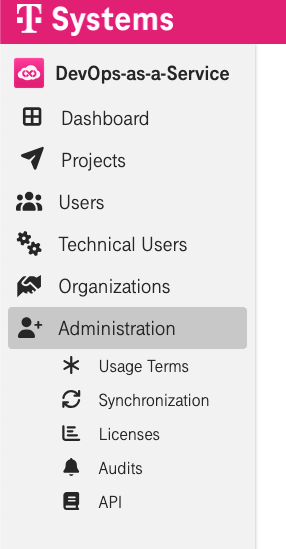
In the Administration menu you can have special options to choose from, most of these features are for troubleshooting and monitoring.
Usage Terms
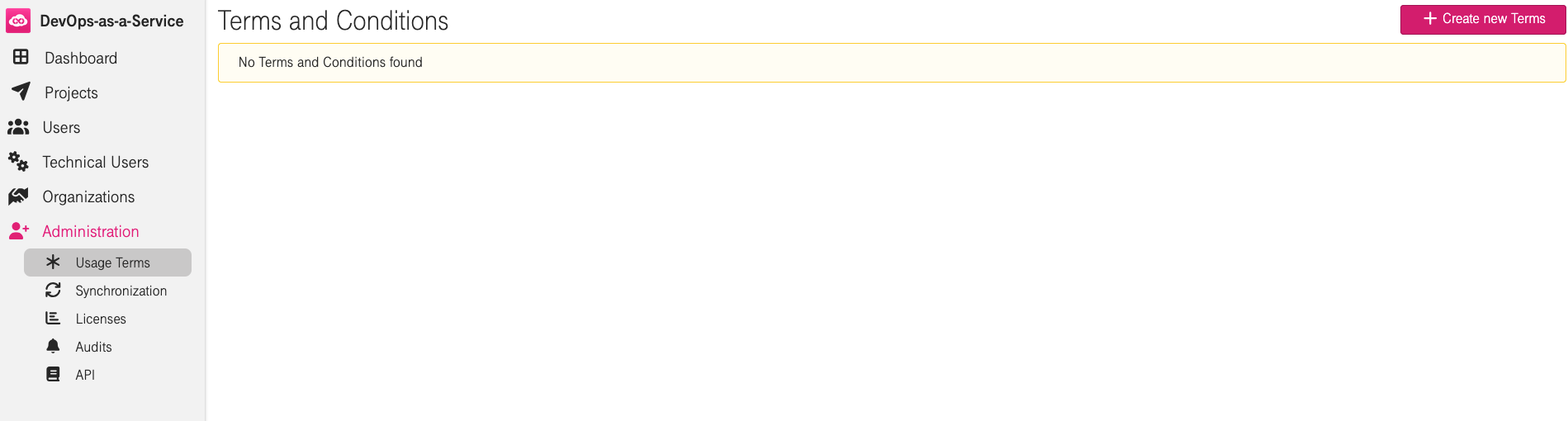
With the "Usage Terms" option you can create and upload your own terms and condition documents about the usage of your own DevOps-as-a-Service toolchain. It is basically an option to provide any document to accept by the users (e.g. documents related to data protection regulations).
As an administrator, you can upload a document by selecting this option and clicking Create new Terms.
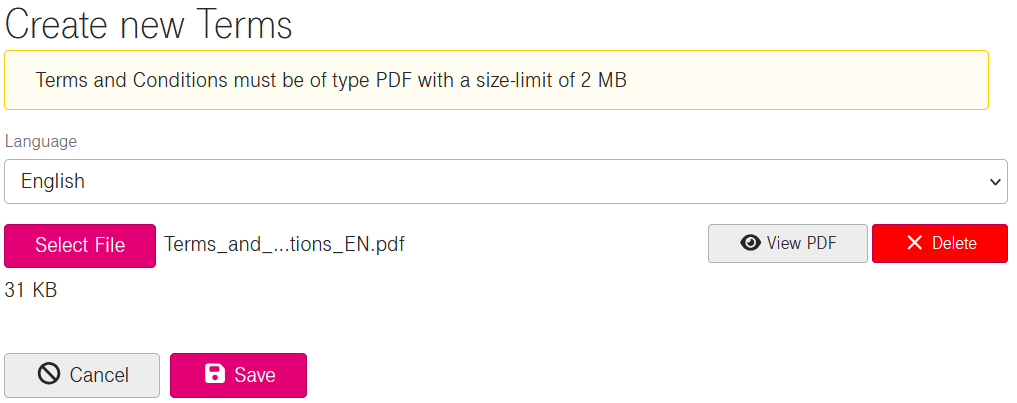
Choose the preferred language, then click Choose file, browse the selected file from your local drive and click Open.

The uploaded document is shown, you can check the content by clicking Open, remove the document by clicking Delete, or you can also Cancel the whole operation. If you would like to use the selected document, click Save.
The selected document will be listed in the documents table and you will be logged out - to re-login and to accept the uploaded document.

After uploading a new terms and conditions document, every existing user has to accept it. Otherwise they are not allowed to login to the DevOps portal.
When new users are invited to the portal, they will receive the uploaded file as an attachment in the invitation mail (so they will be able to read it before following the activation URL).
Every user (including administrators) have to accept the uploaded document only one time, however if you upload another document then both documents have to be accepted by the users.
To remove an uploaded document, click Delete. If you would like to check the content of the uploaded document, click View.
If you decide not to upload a document at all (or you delete all the existing uploaded documents) the invitation process and the login of users will not depend on the acceptance of any document, since nothing is to be accepted.
Synchronization
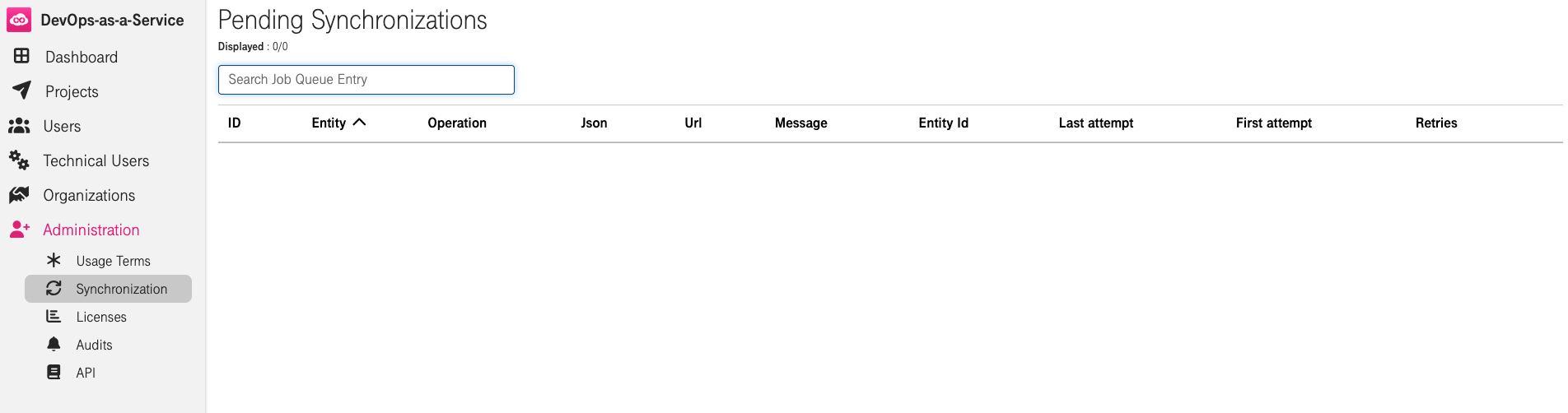
All actions related to users or projects must be synchronized with the LDAP server prior to becoming effective. All pending (i.e. unfinished) synchronizations are listed at the Pending synchronizations page. Successful and finished synchronizations won't be listed.
This information is mainly provided for troubleshooting, in case of errors during the synchronization with the LDAP server.
Licenses
The Licenses page provides information about the number of Active and Available Users as well as the package's User Limit.

Audits
Provides the audit log to check all past activities related to the Portal for up to 90 days.
