

Jira
- Introduction
- First steps in Jira
- DevOps Jira Agile Board Management
- Boards
- View Project Permissions
- Links to Jira vendor documentation
Introduction
This document describes the important features of DevOps-as-a-Service concerning Jira. For general concepts and details about Jira, please refer to the Jira vendor documentation section at the end of this document.
Project admins can edit and save their projects in the DevOps Portal. This can be used to change the name or description of a project. The change is automatically propagated to all tools including Jira.
A custom Jira plugin automatically removes unused screens, screen schemes, and issue-type screen schemes whenever the DevOps Portal deletes a project, helping to free up resources and improve performance.
First steps in Jira
Log in to Jira from DevOps Portal
In DevOps Portal sign in to your account with your registered mail and password.
For more information about logging in to DevOps Portal see DevOps Portal for Users.
Select Project
After successful authentication, you will be directed to the DevOps Portal, in this example the user is assigned to two projects, and the user has a specific role in each project:
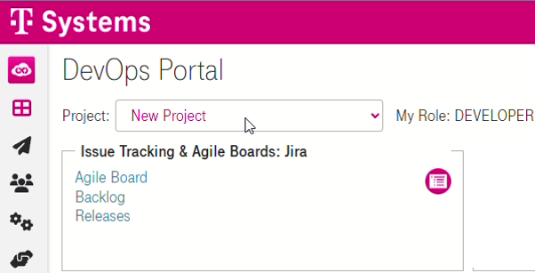
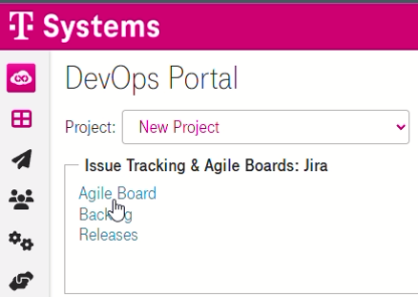
By clicking on Agile Board, you will be redirected to the selected project’s board in Jira:
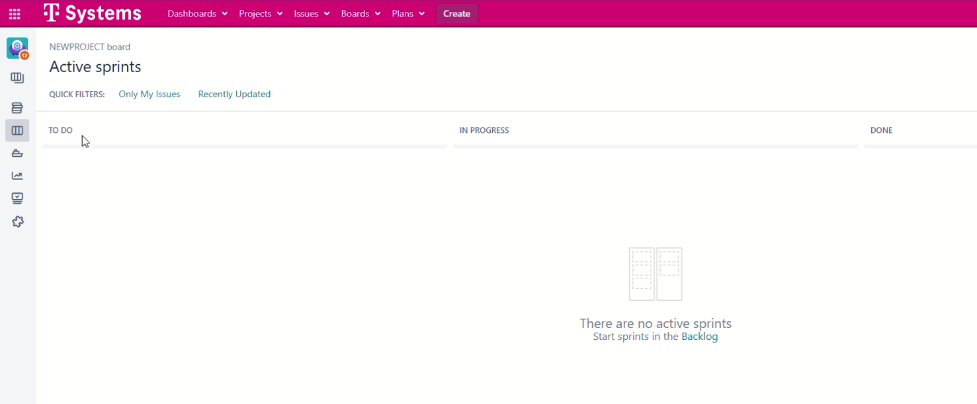
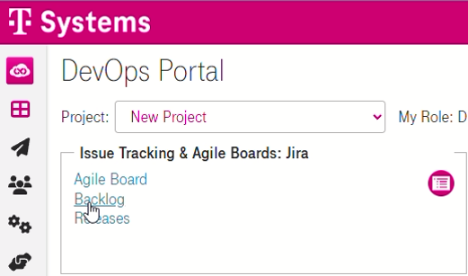
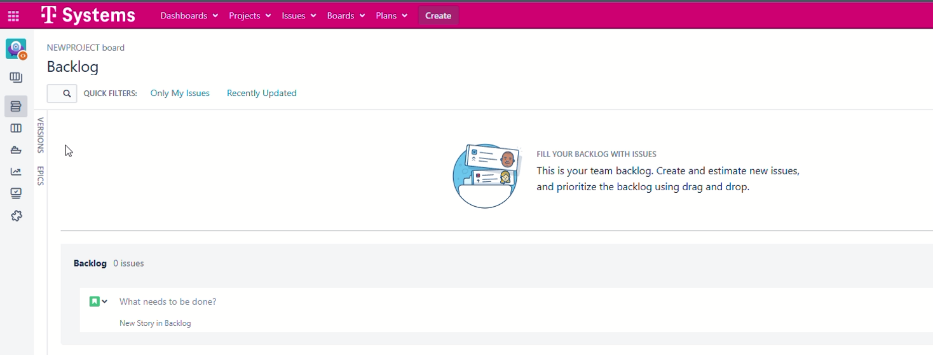
The next option shows the Backlog, where the created issues will appear. If you are the first user to create an issue, the Backlog will be empty:
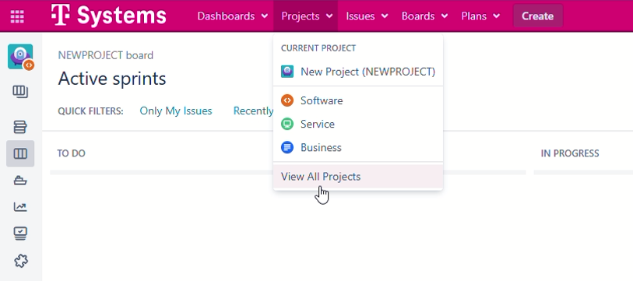
If you would like to create or view issues belonging to other projects you can select the project by clicking Projects on the top. In this example you can see the current project (NEWPROJECT):
If View All Projects is selected, you can see the projects to which you are assigned to.
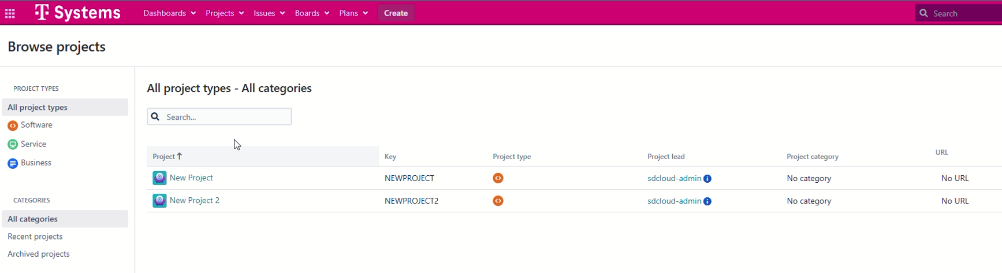
You can select the desired project to continue your work.
DevOps Jira Agile Board Management
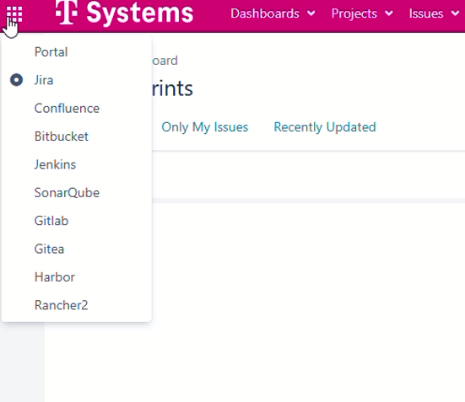
As it is shown in the picture below, by clicking on the dots menu in the top left corner of Jira, you have quick access to all tools which are part of your the DevOps-as-a-Service instance.
Boards
A board displays issues from one or more projects, giving you a flexible way of viewing, managing, and reporting on work in progress. The available types of boards in Jira are:
- Scrum board: For teams that plan their work in sprints. Includes a backlog.
- Kanban board: For teams that focus on managing and constraining their work-in-progress. Includes the option of a Kanban backlog
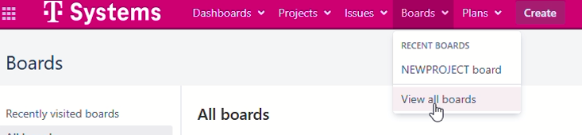
Select the Boards tab and select View all boards:
Create Boards
To create a new board click on Create board button on the right corner:

Select the type of the new board: it can be Scrum or Kanban board.
Creating a Scrum Board
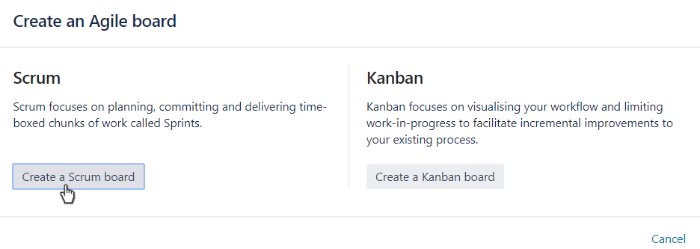
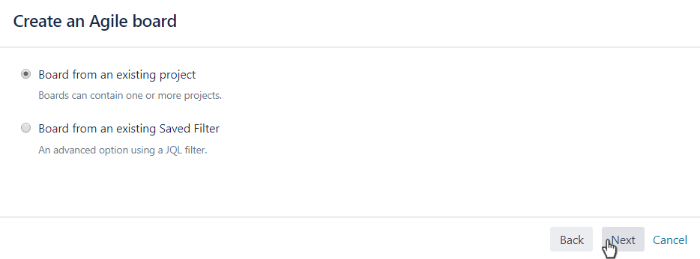
In this example a Scrum board has been selected and there is an option to create a Board from an existing project or from an existing Saved Filter.
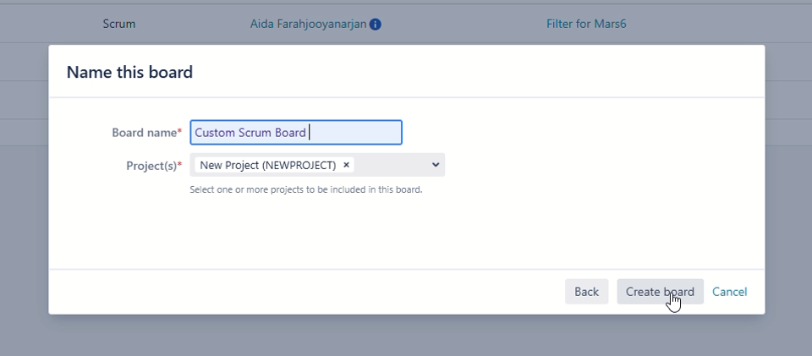
Type the Board Name and select a Project(s). Then click Create board.
In this example the name is Custom Scrum board and the selected project is NEWPROJECT.
Creating a Kanban Board
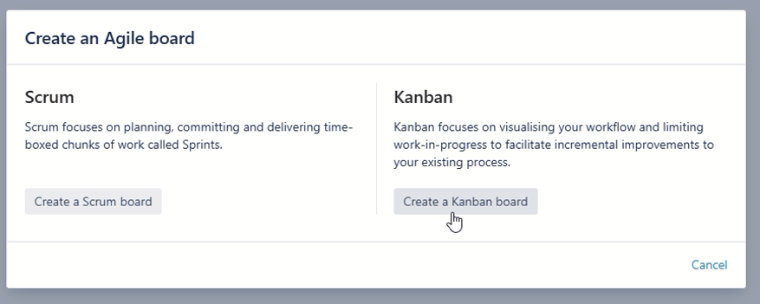
In this example the Kanban board has been selected and created as an existing project like the above example. In the next step, after naming the board
and selecting a project from the drop-down list, we can create the Kanban board:
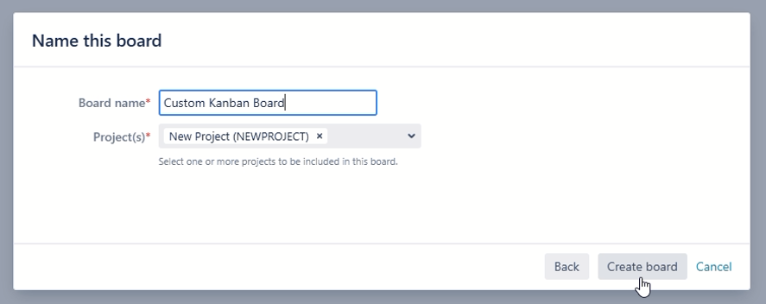
After creating the board, we will be forwarded to the Kanban board, where we can see the selected project with its created issues.
The difference between Kanban and Scrum is that Scrum uses sprints with defined meetings, a fixed set of tasks in a fixed period of time (typically e2 weeks). Kanban on the other hand, is an ongoing process. Scrum boards will be changed/updated after each sprint, but Kanban boards are continuously updated throughout a project and are more flexible.
Manage Boards
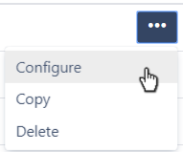
Click the Board menu (3 dots on the right) of the selected board. You can Copy or Delete the board, and you can also modify the default settings by selecting Configure:
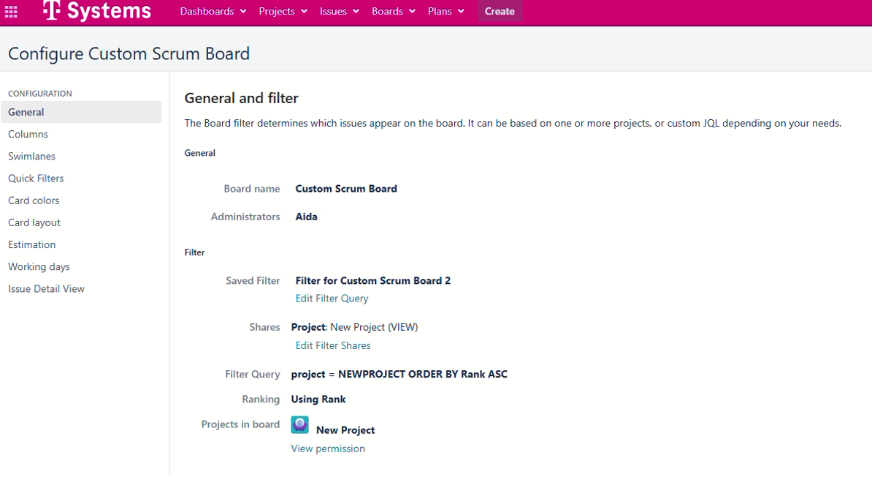
The General information of the board appears, containing the board's name, the administrator(s) and the filter which defines what issues are visualized in the board.
Configuring Columns of a Board
To Edit the columns of the board (e.g. you would like to create a new column) just click Columns tab on the left.
In the following example a new column will be added named Pending.
First a new status can be created by clicking Add status:
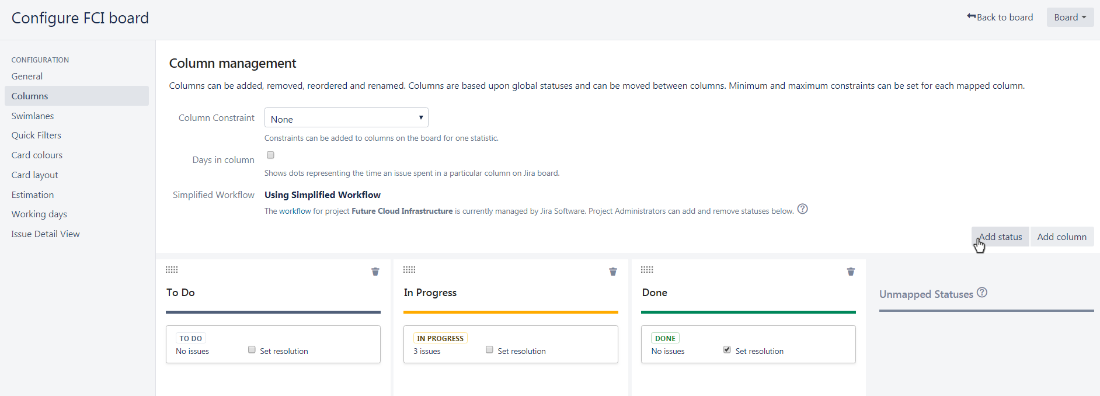
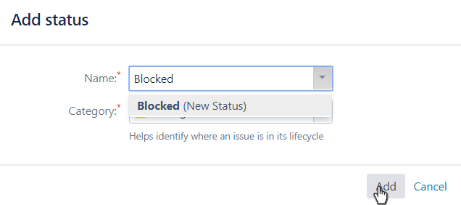
In the appearing window type Blocked for the name than click Add to create a new status.
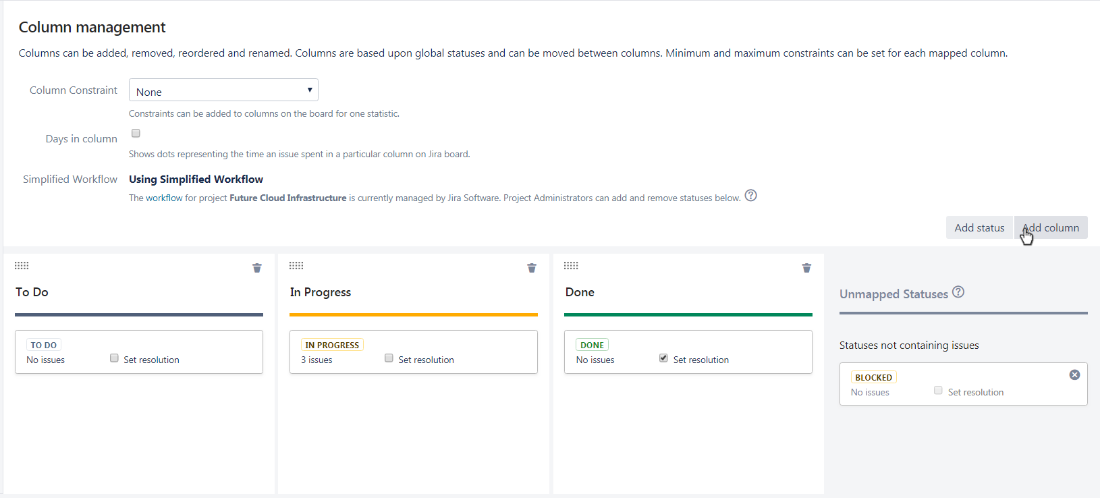
Then the new column can be created by clicking Add column:
In the appearing window type Blocked for the name than click Add to create a new column.
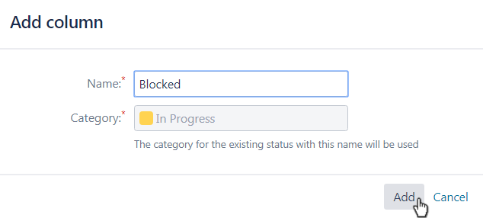
Now the new column with a new status has been created:
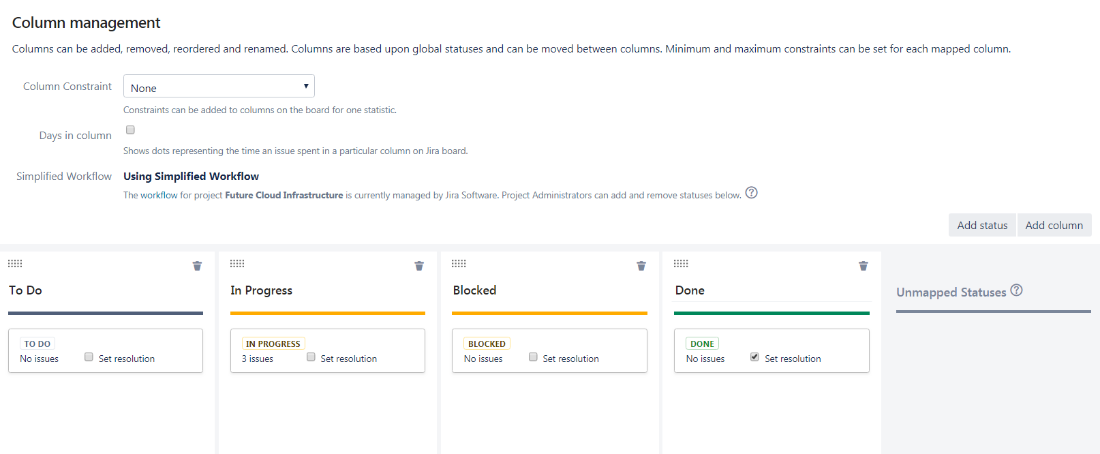
You can also change the columns order with a drag and drop method.
Configuring Swimlanes
To configure the rows (to group issues) click Swimlanes on the left then select from Base Swimlanes on:
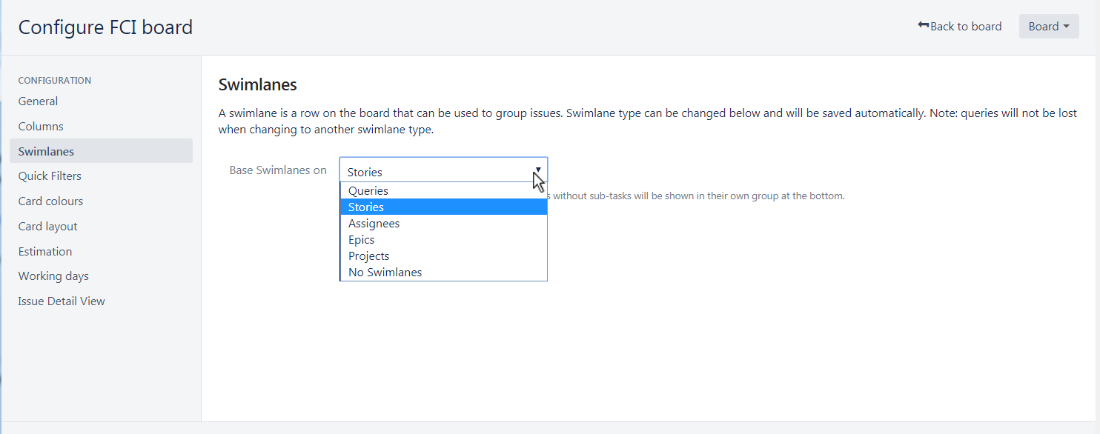
Configuring quick filters
You can set custom filter tabs for the board - in this example a new tab named Max Mustermann is created, and by clicking this tab only the user's issues visible:
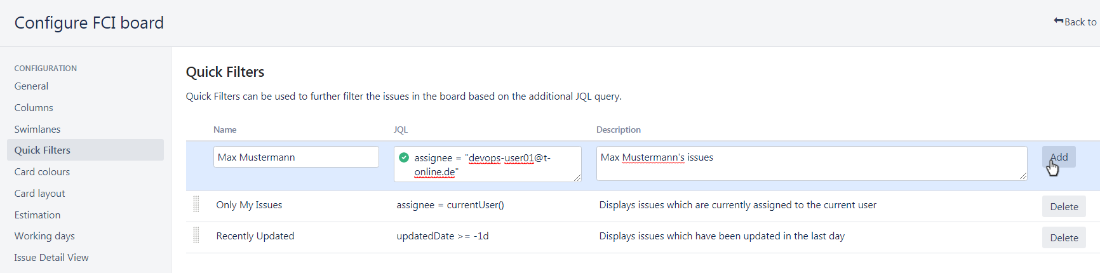
Other Configuration Options
You can set the design of the board by changing settings in Card colors or Card layout
Estimation can be based on Story Points, Original Time Estimate, or Issue Count.
You can set the Working days also (by default it is Monday-Friday)
You can customize the issue's appearance in Issue Detail View.
Change the Project Lead in Jira
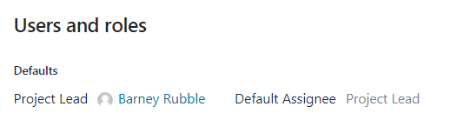
Select the user who would be the Project Lead on the top (in this example Barney Rubble), and change the Default Assignee to Project Lead, then click Update:
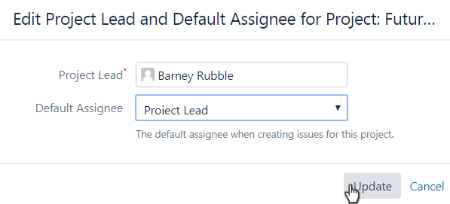
Now as the example shows Barney Rubble is the Project Lead, and this user will be the Default Assignee of the created issues:
Manage Users and Roles
Open your project, click on Project settings icon in the bottom-left corner of Jira.
Select Users and roles on the left menu and you can see the users and groups with the assigned roles:
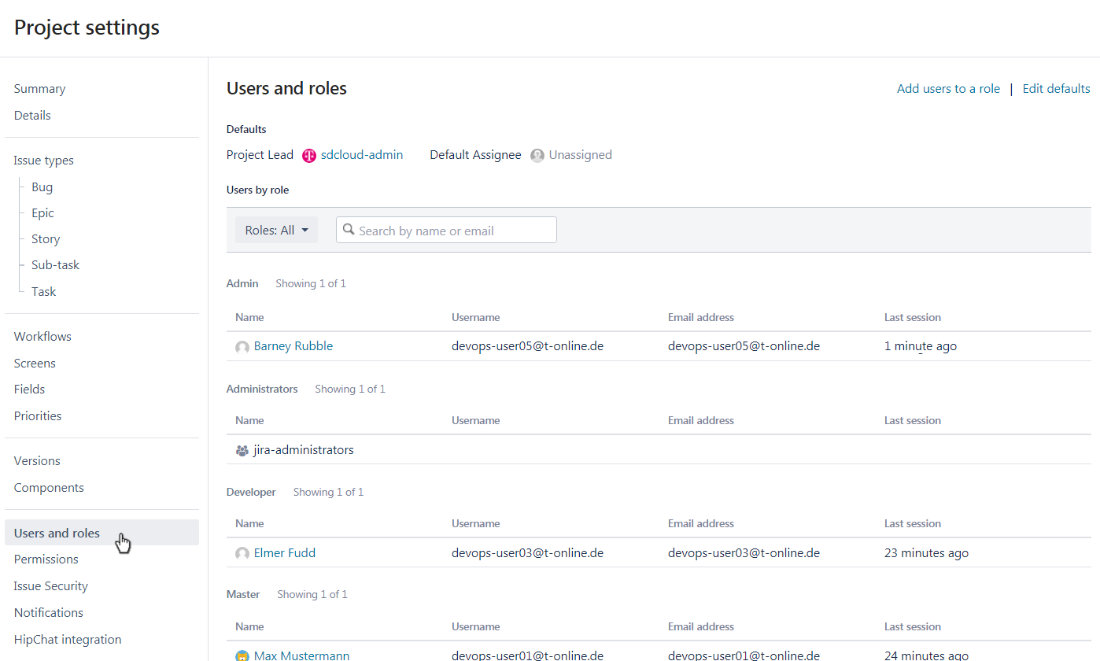
As a project admin you can change the role assignments here, but please note that if you trigger a "Resync project and roles" in the DevOps Portal, it will reset the roles to exactly what has been defined in the Portal. Therefore changes here, make most sense for temporarily exceptions for certain user, e.g. to raise their possibilities for a limited amount of time.
View Project Permissions
Click on Permissions as seen below view the permissions of the 4 project roles:
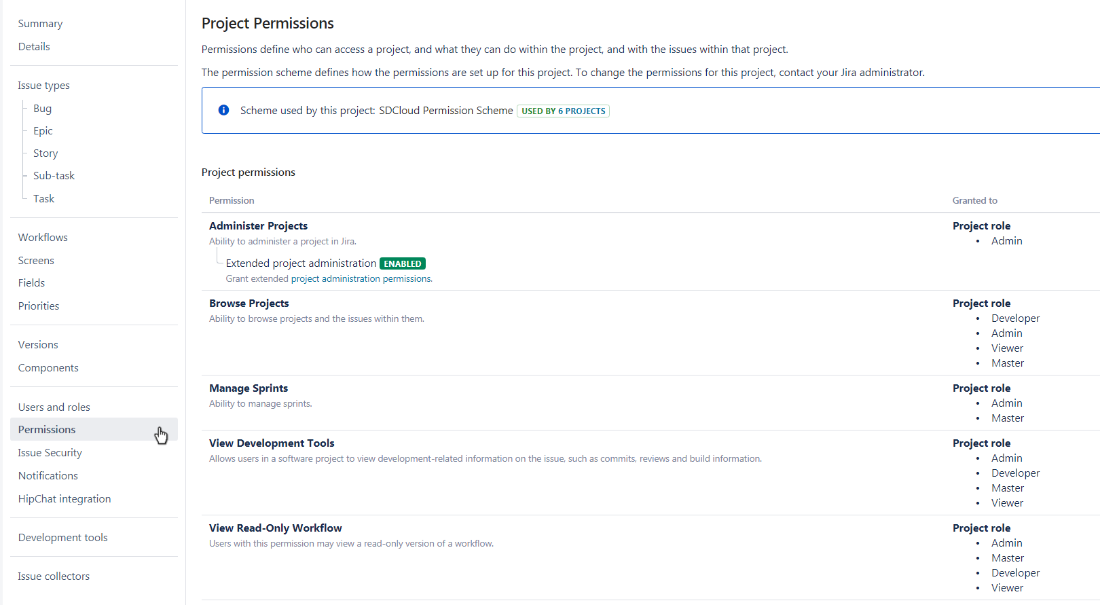
For more details refer to Users and roles
Links to Jira vendor documentation